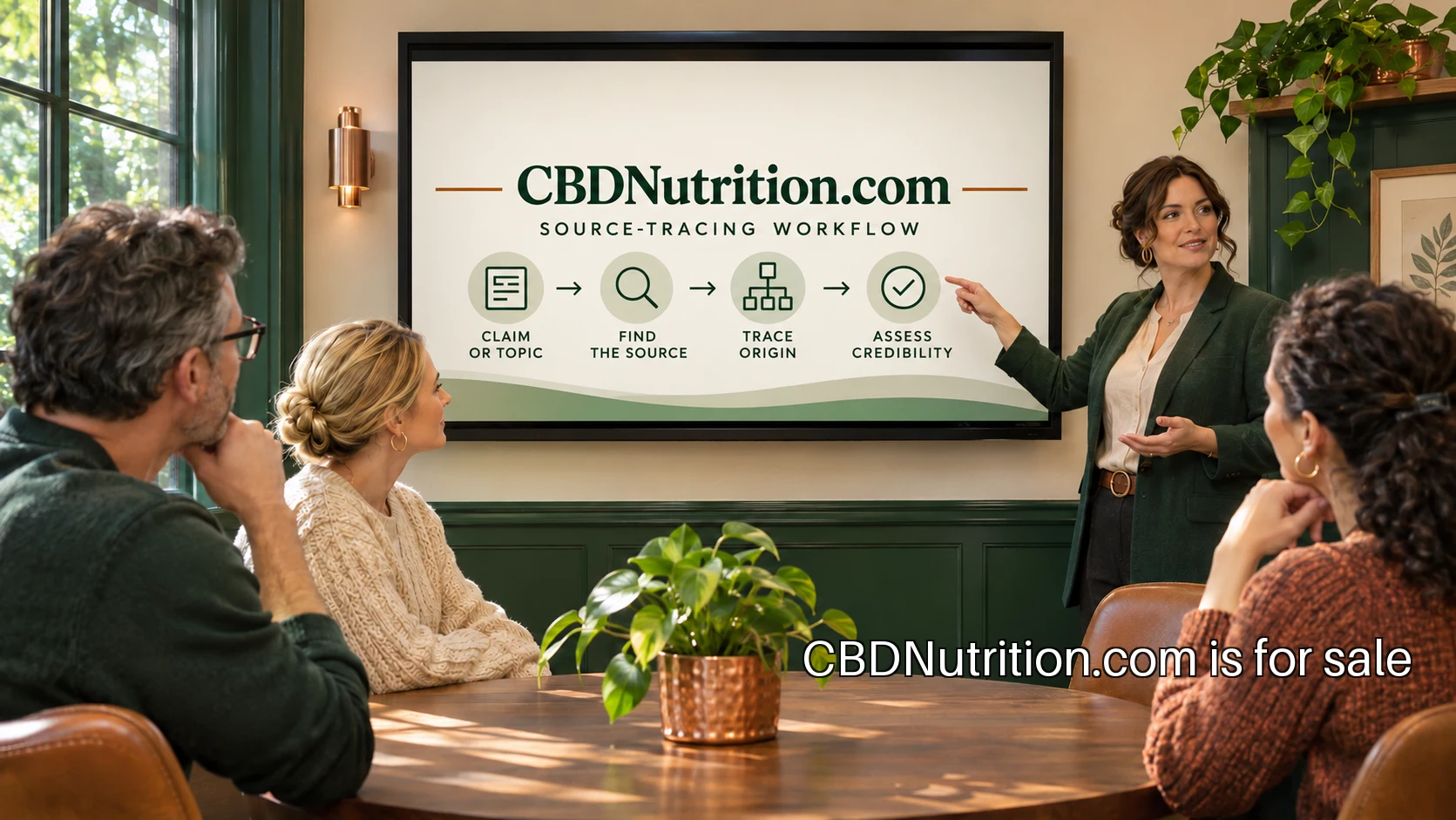
A team can read the same source and produce several different interpretations of it. That makes source-reading a useful skill to practice together. CBDNutrition.com could support a workshop business for editors, writers and content teams working with CBD-related educational material. The offer would be a structured place to practice the decisions that happen before a statement reaches publication.
This is an illustrative education concept. The customer would be a publishing team that wants a shared method for checking sources and discussing uncertainty. The first workshop could focus on one task: following a sentence back to a source and deciding whether the document supports the wording used.
Teach a decision people make at work
A workshop needs a clear outcome. “Understand research” is too broad for a first session. “Create a source record another editor can verify” gives the facilitator and participants something observable. Each person should leave with a completed example and a method they can apply to the next assignment.
The facilitator could begin with a short fictional article excerpt and a small collection of public source documents. Participants would identify the excerpt's claims, decide which documents are relevant and record the passages they would use. The group would then compare its choices and discuss where the wording went beyond the source.
An exercise should be realistic without depending on specialist clinical knowledge. Dates, document types, source attribution and the difference between a summary and a full paper provide useful starting points. More advanced sessions could be designed with qualified subject reviewers and a clearly defined audience.
Build the session around a worked example
Imagine a fictional newsletter paragraph saying that a new report settles a broad question. The exercise packet could include an agency overview, a press release and a research abstract. Participants would label each document, locate its date and write down what it actually contributes to the paragraph.
The facilitator's answer guide should explain the reasoning, including where more information is needed. A good exercise can have more than one defensible editorial choice. The important part is whether the participant can show the source trail and explain the limits of the available material.
NCCIH's guide to scientific journal articles can serve as a reference when developing lessons about article structure. The workshop should use original exercises and acknowledge its source material, rather than simply presenting an agency guide as a proprietary curriculum.
Give teams a reusable working document
The practical takeaway could be a one-page claim record. It would ask for the proposed sentence, source title, publication date, relevant passage, interpretation and open questions. During the session, participants would fill it out, exchange it with a colleague and test whether the colleague could reproduce the reasoning.
That exchange is valuable because a record that makes sense to its author may be difficult for someone else to use. A missing page number or an unclear paraphrase becomes visible when another person follows the trail. The facilitator can use those moments to improve the team's process.
A follow-up exercise might ask participants to bring a public source they regularly encounter. They could classify it and explain how they would describe it in an article. The session would stay focused on editorial work, with no need to evaluate personal health decisions or recommend products.
Choose the right first customer
An initial customer could be a small publication whose editors and freelance contributors need a common checking method. A live team session would allow the facilitator to adapt the examples to that publication's formats. A later open-enrollment workshop could use the same core method with a broader group.
The distribution path could start with a short public exercise that prospective participants can try. A publishing association or editorial newsletter might share it with an audience interested in professional development. The sample should show the style of the workshop and the type of thinking it asks participants to do.
NCCIH's advice on evaluating online health information offers another useful foundation for a sample exercise. The founder can turn the general question of source support into a concrete activity, then invite teams to practice the method together.
Plan the teaching operation
The founder needs more than slides. The operating materials include a facilitator guide, participant worksheet, source packet, answer notes and a way to collect feedback. Each source packet needs a review date so an outdated example does not silently become part of the curriculum.
Accessibility belongs in the preparation. Participants should be able to read the documents in advance, use a text version of the worksheet and follow the session without relying on small text in a shared screen. Timing should leave room for the actual exercise and discussion, rather than filling the session with a lecture.
A possible business model is a fee for a private team session, followed by optional additional modules. The first offer should stay narrow enough to teach well. A founder can learn from the questions participants ask before designing an extensive course catalog.
Test one exercise first
The first milestone is a pilot exercise with a few editors. Watch where participants disagree, which instructions need explanation and whether the completed records are usable by another person. Revise the exercise before building the full workshop around it.
CBDNutrition.com would give the program a consistent subject identity across its teaching materials, workshop pages and participant communications. A founder could develop a recognizable education brand while keeping the first lesson tightly defined. To discuss acquiring the domain, describe the teams you want to teach and the first skill you would help them practice. PremiumBrands can also help pursue a different name if your program calls for one.