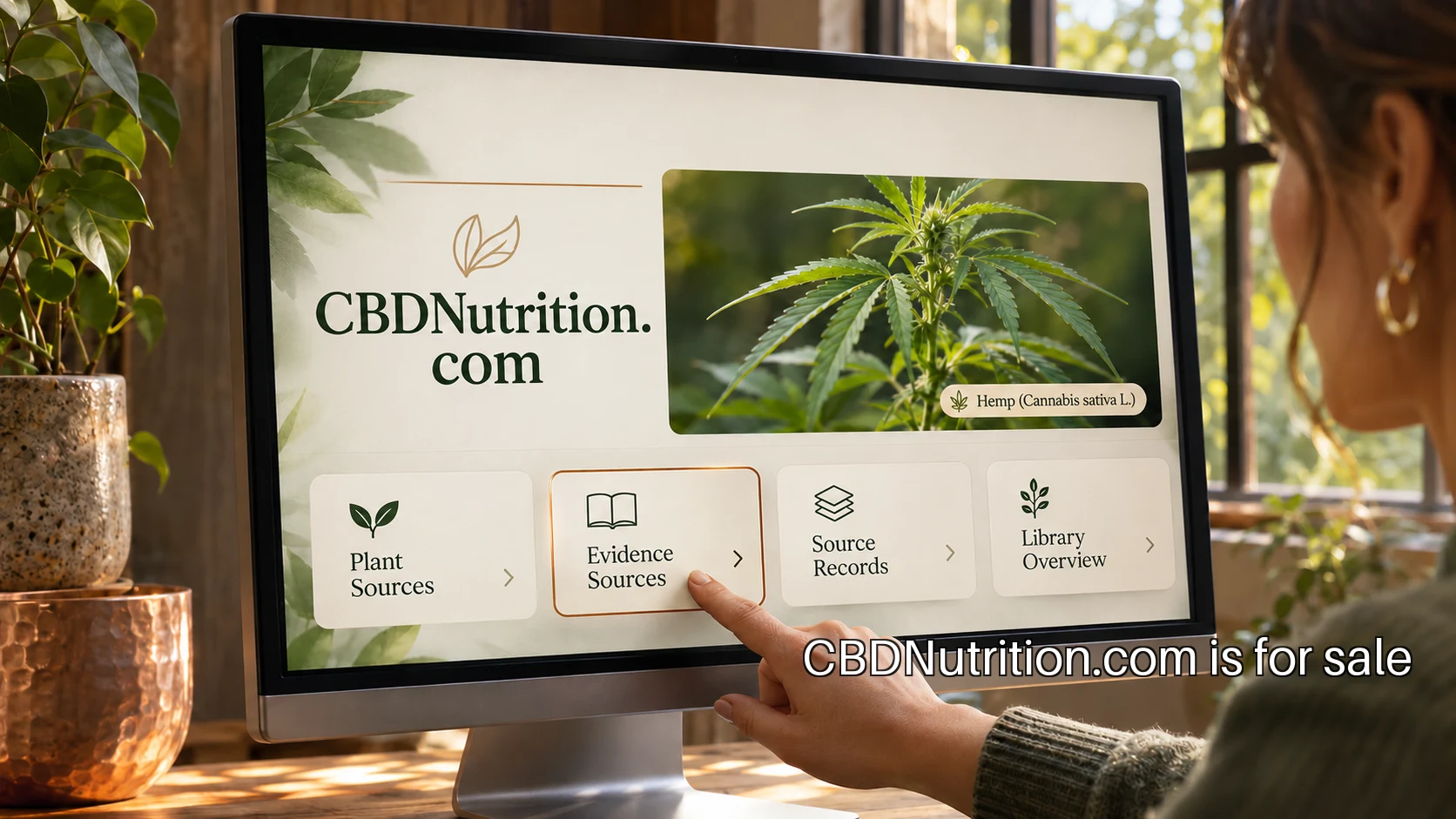
A useful reference publication starts with a reader's question. For CBDNutrition.com, one possible business is a public library that helps people find the source behind CBD-related information and understand what kind of document they are reading. The core product would be a collection of carefully maintained question pages, each with a visible trail back to the original material.
This is an illustrative publishing concept. Its first audience would be adults who encounter a statement in an article, presentation or product discussion and want to locate the underlying information. The editorial promise would be practical: a reader can see where a statement came from, when the source was checked and what question that source actually addresses.
Begin with three useful questions
I would start with a very small collection. One page could explain how to recognize a public-agency overview. Another could show the difference between a research paper and a press release about it. A third could explain how to find a study's methods and limitations. These pages give the founder a way to test the format before building a large archive.
Each page could use the same source card. The card would contain the document title, publisher, publication date, direct link, the question it addresses and a short description of its scope. Beneath it, an editor would explain how the document relates to the reader's question. The structure makes the source visible without asking the reader to work through a long bibliography before finding the useful part.
NCCIH's guidance on evaluating online health information provides a useful editorial reference: a claim about health benefits should have research that supports the statement. A library could apply that principle by making the connection between its own sentences and their sources easy to inspect.
Give readers a route through the collection
A large list of articles is difficult to navigate when the visitor does not yet know the vocabulary. Organize the first collection around tasks. Someone who wants to identify a source needs a different entry point from someone checking a publication date or looking for the complete study behind a headline.
For example, a page called “Where did this claim come from?” could lead to a short source-tracing exercise. A page about publication dates could show the difference between the date of a study, the date of an article describing it and the date an editor last checked the page. A glossary could explain terms encountered in those exercises, with each definition linked to a specific example.
The first test is simple. Give a reader a question and watch whether they can find the relevant source card. Record the point where they lose the trail. The next revision should address that point, rather than adding another dozen pages that use the same confusing structure.
Make maintenance part of the product
The library needs someone responsible for every published page. An editor should have a review queue, a way to record source changes and a correction path that readers can use. A broken source link is one type of problem. A source that still loads but now says something different is another.
A small internal register could connect every page to its important source documents. When one of those documents changes, the editor can identify the affected pages. The public page can then carry a short, meaningful update note explaining what changed. This makes maintenance a normal part of the publication instead of an occasional cleanup project.
NCCIH's guide to reading a scientific article is helpful background for deciding which parts of a paper the library should explain. The publication can use its own examples and wording while teaching readers to look beyond the short summary.
Find the first readers
A credible distribution path would be a free email digest built around one useful source trail per issue. Each edition could answer a question, link to the library page and explain what the editor checked. Readers would know what they are subscribing to before committing their attention.
The founder could also make sample source cards available to other publishers with clear attribution terms. A specialist newsletter might refer readers to a card when covering a new report. A training organizer might use a public example in a workshop. Those relationships should begin with something useful to share, rather than an assertion that the library is already an authority.
A possible revenue model is a paid professional edition with saved collections, team annotations or editorial research tools. The public reference pages would remain the way people discover the work. Before developing those features, the founder should test whether editors actually need them and which part of their workflow they improve.
The first working version
The initial team needs editorial judgment, subject review appropriate to the material and a reliable publishing workflow. The first milestone could be three complete pages, a source register and one digest issue. A small reader test would reveal whether the cards are understandable and whether the questions match real needs.
CBDNutrition.com fits this direction because the address can serve as the stable name above the collection. The library could grow by adding questions, contributors and formats while keeping its editorial subject clear. To discuss acquiring the domain, describe the reference resource you want to build through the Acquisition Details page. PremiumBrands can also help pursue another name if that is the better home for your publication.